

Tuya Major Upgrade: Zigbee Eight Capabilities!
Tuya Major Upgrade: Zigbee Eight Capabilities! Building a More Flexible and Reliable Smart Device Control Experience
I. How Important is Zigbee Technology?
Zigbee is a low-power, short-range wireless communication technology. Through Zigbee protocol, coordinator, or gateway communication, devices can achieve hand-in-hand message relay or information collection. Not only does it have lower power consumption, but it can also easily bypass various obstacles. It operates in the 2.4GHz (globally universal), 868MHz (Europe), and 915MHz (US) frequency bands, with transmission rates of 250kbit/s, 20kbit/s, and 40kbit/s respectively. The transmission distance is typically 10-75m, and through intelligent networking capabilities, it can continuously extend the transmission range, meeting the communication needs of most smart home, commercial, and industrial scenarios.
Its core technical features include:
-
Low Power Consumption: Low transmission rate (only 1mW transmit power required), supports sleep mode, long device battery life;
-
Low Latency: Device search latency approximately 30ms, sleep activation latency 15ms, suitable for real-time scenarios like industrial control;
-
High Reliability: Through collision avoidance mechanisms, dedicated time slot reservation, and MAC layer data acknowledgment retransmission, communication stability is ensured;
-
Strong Security: Supports CRC verification, authentication, and AES-128 encryption, ensuring information transmission security.
Similar to the TCP/IP protocol, the Zigbee protocol is divided into four layers: physical layer, MAC layer, network layer, and application layer. The physical layer and MAC layer are based on the IEEE 802.15.4 protocol, which is the key reason for achieving low power consumption.
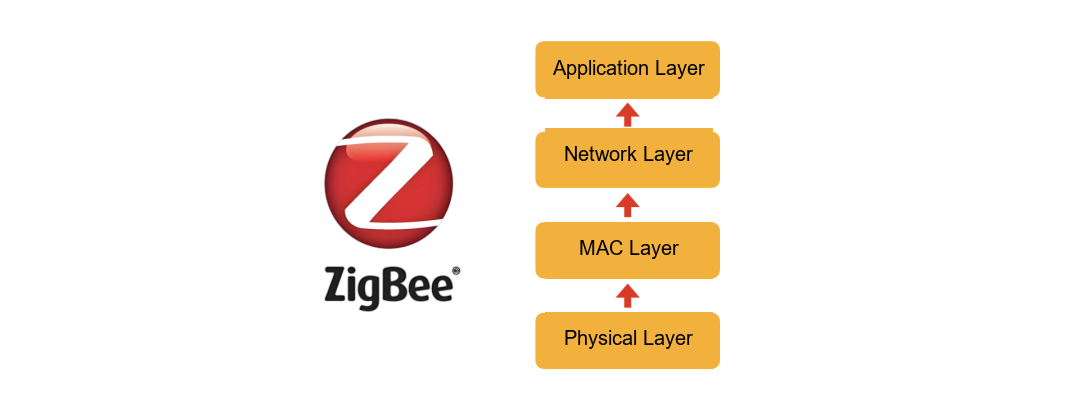
Figure: Zigbee protocol four-layer architecture — Physical Layer, MAC Layer, Network Layer, and Application Layer (based on IEEE 802.15.4)
II. Tuya’s Zigbee Capability Major Upgrade
To help developers create more creative and competitive Zigbee products, Tuya continuously expands Zigbee categories, and has significantly upgraded group control, remote restart, OTA firmware remote upgrade, faulty gateway/sub-device replacement, button anti-mistouch, multi-control association, and other functions, creating a more flexible, convenient, and reliable smart device control experience for users.
Currently, Tuya supports the development of the following Zigbee device categories:
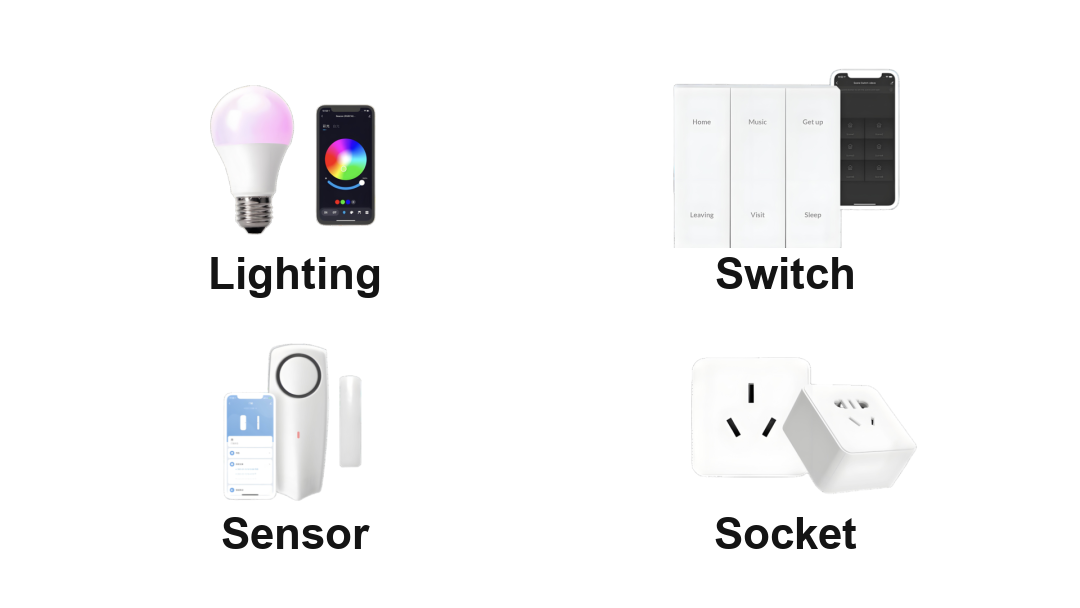
Figure: Tuya-supported Zigbee device categories — Part 1
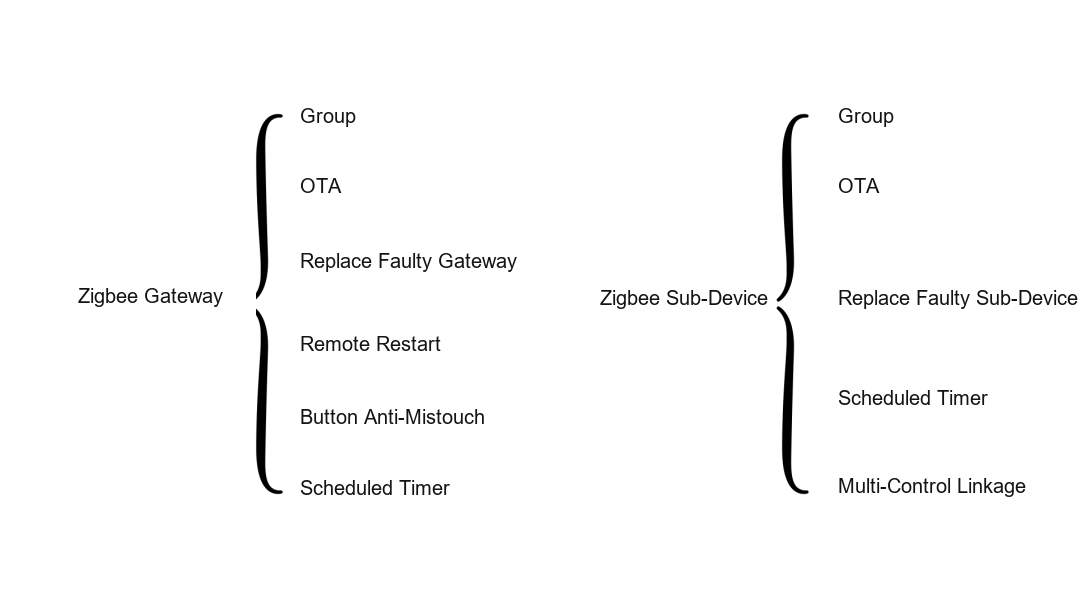
Figure: Tuya-supported Zigbee device categories — Part 2
1. Group Control Capability, Effectively Improving Device Management Level
Tuya’s group function is built on the Zigbee network broadcast mechanism, which can group smart devices with the same or similar functions into a logical group, ultimately achieving efficient group control.
-
Applied in Large Commercial Spaces: Such as shopping malls and office buildings, all lighting fixtures can be grouped together. Through the Tuya-Powered App, administrators can adjust light brightness and color temperature with one click, quickly creating different scene atmospheres;
-
In Industrial Scenarios: Sensors on assembly lines can be grouped, and device operation information can be obtained in real-time batches, significantly improving production monitoring efficiency.
Compared to controlling individual devices, group functionality eliminates tedious operation steps for users, reduces management complexity, and is especially suitable for scenarios with many devices, effectively improving the convenience and intelligence level of device management.
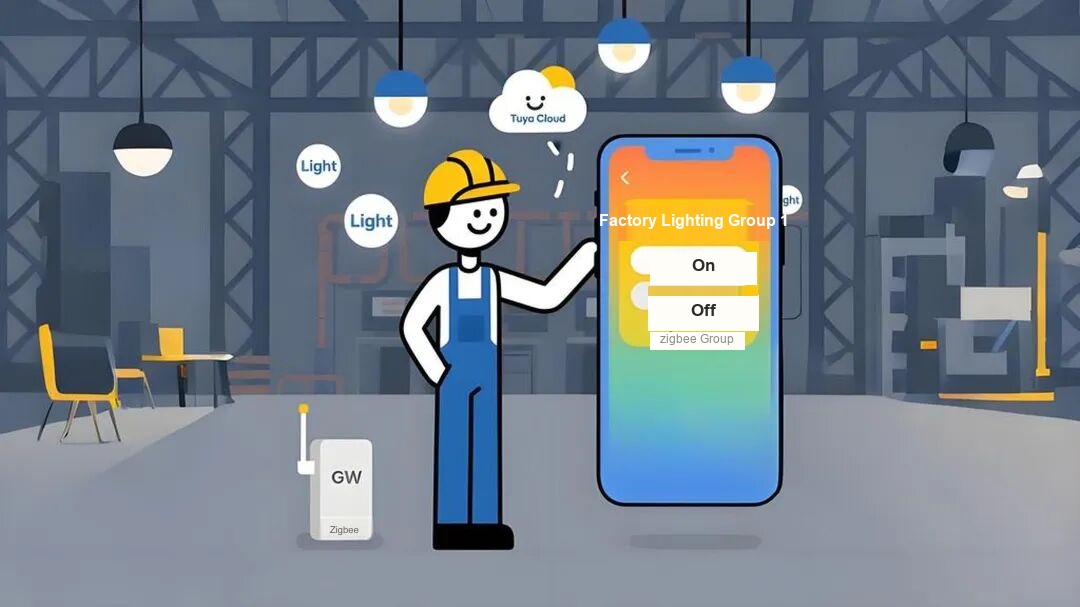
Figure: Zigbee Group Control Capability — one-click control of grouped devices for commercial and industrial scenarios
2. OTA Firmware Remote Upgrade, Greatly Optimizing User Experience
OTA (Over-The-Air) technology leverages Zigbee wireless communication to enable remote firmware upgrades for devices. Tuya employs efficient differential upgrade algorithms. During function iteration or bug fixes, only the firmware update portion needs to be transmitted, which significantly reduces data transmission volume, network pressure, and upgrade time.
For shipped smart devices with firmware issues, manufacturers don’t need to recall products. Through OTA patch push, users can complete upgrades at home, quickly fixing issues, greatly reducing enterprise after-sales maintenance costs and avoiding large-scale returns and rework due to firmware issues. When launching new features, timely updates can be provided to users, continuously delivering optimized experiences, enhancing product competitiveness and user stickiness.
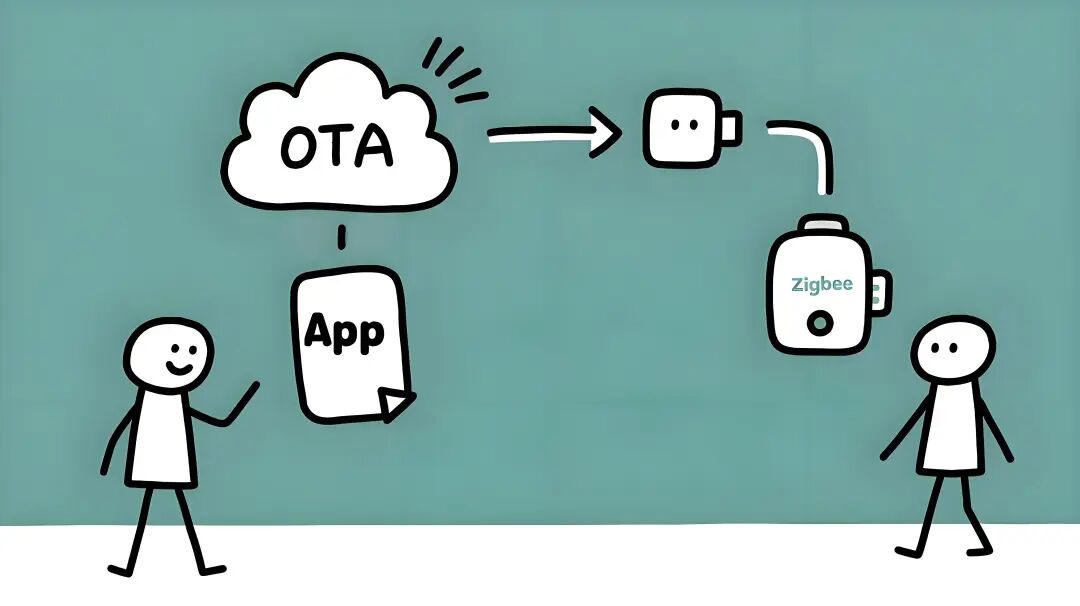
Figure: OTA Firmware Remote Upgrade — efficient differential upgrade algorithm reduces data transmission volume and upgrade time
3. Replace Faulty Gateway Without Reconfiguring Groups + Scene Information
After replacing a faulty gateway, the system automatically identifies and restores the sub-device groups and scene information configurations under the original gateway. Taking a smart home system as an example, when the main gateway fails and a new gateway is replaced, previously set scenes like "Home Mode" and "Away Mode," as well as the group association relationships of each sub-device, require no reconfiguration and immediately resume normal operation, completely solving the thorny problem of needing to reconfigure when replacing traditional gateways.
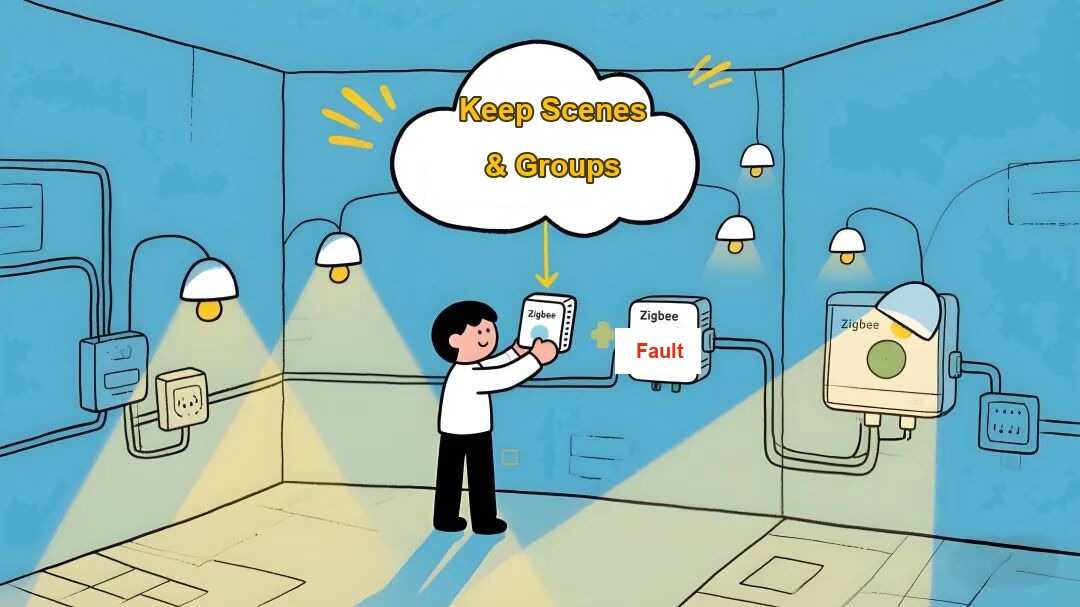
Figure: Faulty Gateway Replacement — automatically restores sub-device groups and scene information without reconfiguration
4. Replace Faulty Sub-Device, Seamless Business Process Continuation
After replacing a faulty sub-device, Tuya’s system automatically synchronizes the original device’s group membership, scene linkage, and other information to the new device. For example, in a smart agriculture project, if a temperature and humidity sensor fails, a new sensor will automatically join the original sensor group and continue participating in the irrigation system’s automated control logic without reconfiguration. This not only reduces manual configuration workload but also perfectly avoids scene confusion caused by reconfiguration, ensuring seamless continuation of business processes during device replacement.
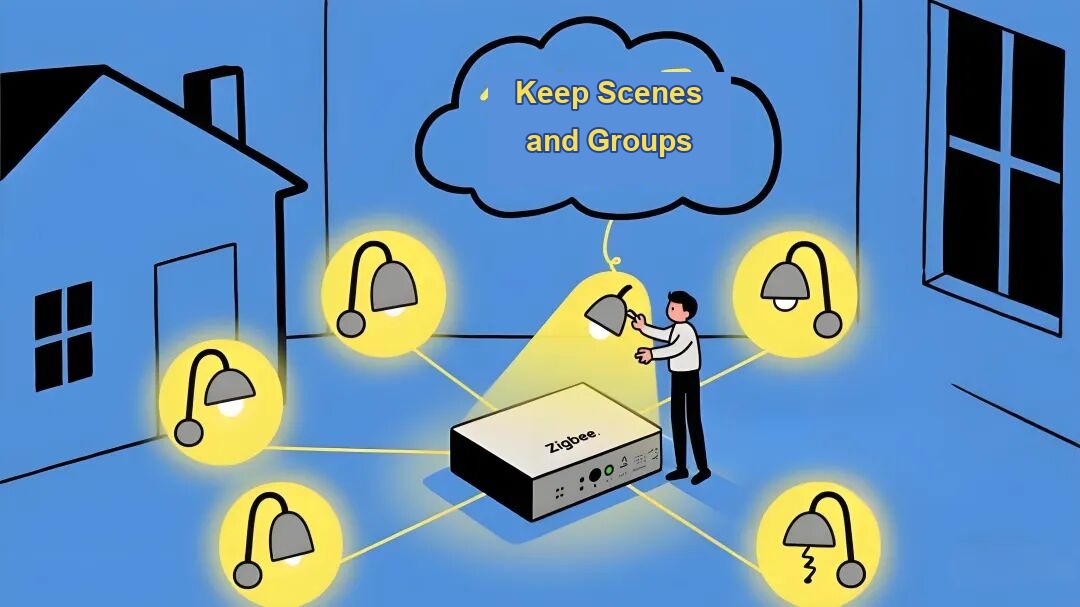
Figure: Faulty Sub-Device Replacement — automatically synchronizes group membership and scene linkage to the new device
5. Remote Restart Function, Reducing Maintenance Time and Workload
Leveraging the connection capability between Zigbee gateways and Tuya Cloud, the system can directly send remote restart commands to devices through Tuya’s cloud platform. Especially for environmental monitoring devices installed on building rooftops, or industrial sensors in hazardous chemical areas, when devices experience lag or crashes, operations personnel don’t need to risk going to the site — they can remotely restart devices from the office, quickly restoring normal device operation, reducing manual maintenance costs and safety risks.
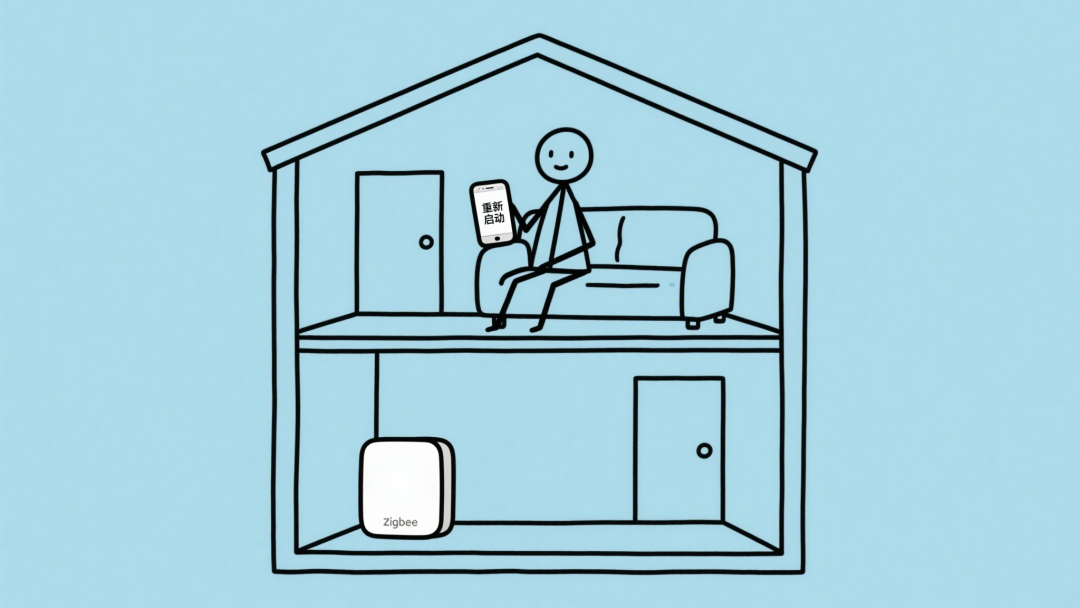
Figure: Remote Restart Function — send restart commands remotely through Tuya Cloud platform
6. Button Anti-Mistouch, Ensuring Stable Smart System Operation
This feature adopts software-level command blocking technology, which can directly prevent various accidents caused by mistouching buttons. When button anti-mistouch is enabled on the App, the gateway’s physical reset button signal will be intercepted by the system, avoiding gateway resets caused by button aging or accidental operation. In public areas with frequent foot traffic such as schools and hospitals, it can effectively prevent system resets triggered by accidental contact with gateway device buttons, ensuring stable network operation.
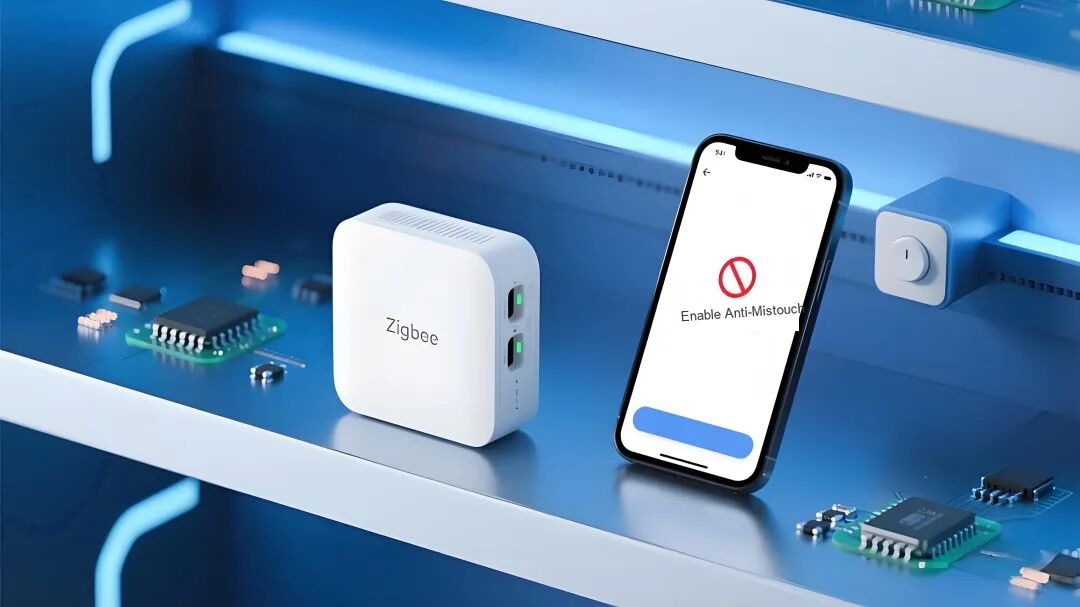
Figure: Button Anti-Mistouch Feature — software-level command blocking prevents accidental gateway resets
7. Timer Function, Making Smart System Operation Better Fit Application Scenarios
Users can flexibly set specific times for device command execution on the Tuya-Powered App. For example, in daily smart home scenarios, automatically starting the coffee maker to prepare breakfast, or turning off the air conditioner on schedule to save electricity; in industry, scheduled startup of production line equipment for preheating; in smart agriculture, scheduled activation of ventilation equipment to regulate greenhouse air circulation. The timer function not only helps industrial scenarios achieve automated device operation but also better aligns with users’ living and production rhythms, effectively improving energy utilization and device convenience.

Figure: Timer Function — schedule device command execution for automated smart system operation
8. Multi-Control Association, Building a More Flexible Control Network
The multi-control association function is built on the data interaction and linkage triggering mechanism of Zigbee devices, supporting the association of dp (data points) from multiple switch devices. In home scenarios, users can associate multiple switches in the living room, bedroom, and hallway with the same chandelier — no matter where they are, operating any switch can control the chandelier; in meeting rooms, projector switches, screen升降 switches, and light switches can achieve linked control, completing meeting preparation with one click. Tuya’s multi-control association function breaks through physical limitations between smart devices, building a flexible control network for users and delivering a more convenient and intelligent interactive experience.
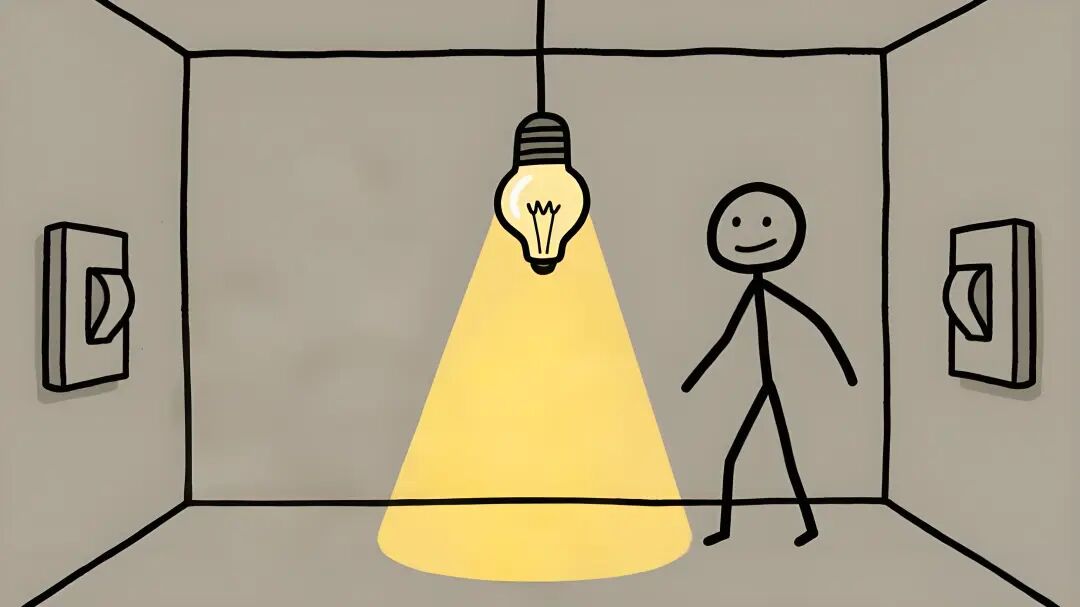
Figure: Multi-Control Association — link multiple switches to the same device for flexible control networks
III. Developer Q&A
If you encounter any issues during development, you’re welcome to ask questions on the Tuya Developer Technical Forum, where technical staff will assist you promptly:
https://www.tuyaos.com/viewforum.php?f=18
-END-
For other business cooperation or smart product development consultations, click [Read Original], fill out the form, and a dedicated representative will provide 1-on-1 service.
Is this page helpful?
YesFeedbackIs this page helpful?
YesFeedback